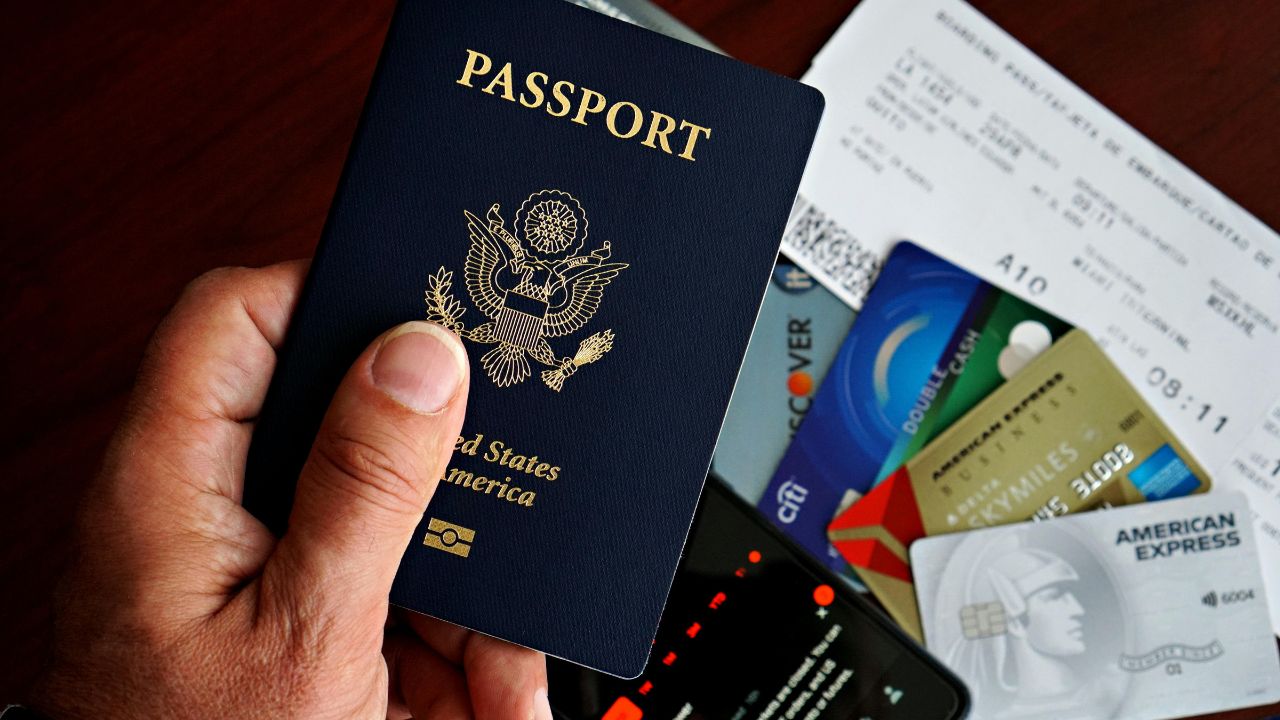
The process of going through the balance of paperwork to get a passport issued to your child can be daunting concerning that you have a family situation which is not so straightforward as most. You, perhaps, are a single parent, or the other parent is not present at this time. Form DS-5525 arrives there to the rescue, a sort of thumb Band-Aid on the wound. The government coming to grasp your special family narrative in order that your child may yet receive a passport. It’s officially called the “Statement of Special Family Circumstances,” and it exists for those times when getting the standard two-parent consent just isn’t possible. This isn’t about bureaucracy for its own sake; it’s a practical solution designed to help real families in less-than-standard situations while still keeping children’s safety the top priority.

Who Actually Needs to Use This Form?
You might be wondering if your situation qualifies for using the DS-5525 form. It’s not for every minor disagreement between parents; it’s reserved for truly special circumstances. This form becomes your go-to if one parent is completely absent and cannot be found despite your best efforts to locate them. It is also the correct strategy when there is serious safety consideration. Such as a history of domestic violence or dating restraining order that would be withholding contact with the other parent. There are other reasons like a parent in incarceration, very sick and he/she cannot reply or is said to be mentally incompetent. If you have full legal and physical custody through a court order that specifically terminates the other parent’s rights, that would also lead you to use this form.
A Walkthrough of Filling Out the Form
Anyway, the way of addressing the form itself without stress, is what we should break down. The first move to do is to ensure that you are operating with the latest version and so, you can always download it directly on the official U.S. Department of State site. You will begin by providing the basics about your child: his or her complete name, date of birth, and place of birth. Then you will tell us about what you and the other parent know. The most important part is Section 5, where you explain your special circumstances. This is not where to be short, you must narrate the entire story. Explain honestly and in detail why you cannot muster the consent of the other parent. Specifically talk about dates and places and activities you’ve undertaken.
Gathering the Right Documents to Support Your Case
The completion of the form and another important step is proving your story. The government will require the appearance of evidence to prove the special circumstances that you have mentioned. In the event you are asserting that the other parent is unavailable, you will be asked to demonstrate the efforts of locating the other parent such as the returned certified mail receipt or a testament of a private investigator. A copy of a restraining-order or a police report is necessary as well on safety issues. If a court has given you sole custody, you must provide the complete court order. A parent’s incarceration would require documentation from the correctional facility. Don’t leave the ordinary papers either, such as your original birth certificate and your government ID. Imagine it as constructing a super powerful, paper based case that summarizes what you really want to say and are telling the truth.
Steering Clear of Common Pitfalls
Some of the mistakes that can be avoided have made many otherwise well-intentioned parents run astray. Among the greatest mistakes, one is just being overly vague on the form. It is not enough that you write that he is not around, but rather be able to explain and give a time schedule of when it happens. The forgetting not to get the form notarized is another typical form of the hiccup where the little stamp and signature means everything. Other parents attempt to use this form towards the wrong motives as well, such as simply not getting along with the other parent. Constituents of serious circumstances The DS-5525 applies not to general disagreements. Last but not least: check that you are not using an outdated form and that all the single fields are complied with.
What Happens After You Mail It In?
After sending your application package that is the start of the waiting game. The standard processing normally takes four to six weeks; however, it may take them longer in case they require additional information on your part. The Department of State may call or e-mail you, and you do not want to miss a message. In case your travel date is near in future, you can pay a special charge of express handling which reduces the time by approximately half. The three give you a tracking number that allows you to track online the status of your application. What to keep in mind is that you should not make any international travel plans until such a time as you have the physical possession of that passport. It is always good to be on the safe side since approvals are not guaranteed and timelines may change.
How This Process Protects Everyone Involved
It is understandable to think that this is a lot of hoop jumping but it has a logic behind that choice. What is sometimes frustrating is that the process is founded on a single objective which is to safeguard children. The preventative measures against international parental child abduction are an important subject of the safety net of the government. In asking copious evidence of your exceptional circumstances they are acting to secure the assurance that a child is not removed out of the country despite the opposition of another parent or without their being aware of it. It’s a system designed to balance compassion for your situation with rigorous protection of a child’s well-being. Lying on this form is a federal offense since the future of a child is unimaginably high.
Other Paths You Might Consider Depending on Your Situation
It is accessible before you sign in to the DS-5525, whether there is an alternate route that may prove easier to the user. In case the other parent is willing to provide consent but simply cannot find the time to visit a passport office, he/she can instead complete Form DS-3053 and submit it to the notary service’s signature. In case one of the parents has already died, the consent would be taken care of by submitting the death certificate. An official guardianship can sometimes take the place of parental consent in case you are a legal guardian of the child by court order. It is better to try these first since in many cases it may be quicker and simpler than demonstrating that special circumstances exist.
Helpful Tips for a Smoother Experience
This process can be made quite less stressful through a bit of preparation. Gather all the single- copy documents you may require first, before you do anything. Excessive paper is a plus rather than a minus. In composing your statement of circumstances, write as though you are telling a friend who already knows nothing about your life- be descriptive, make them straight and chronological. In case you make up your mind, it is best to receive a consultation with a family lawyer. You can have your documents and statements reviewed to ensure that nothing is wrong. Last, attempt to file your application in any local passport acceptance facility. The trained staff there can often do a quick check to make sure you haven’t missed anything obvious before you send it off.
DS-5525 vs. Other Passport Consent Options
| Feature | DS-5525 (Special Circumstances) | Standard Two-Parent Consent | DS-3053 (Notarized Consent) |
| When to Use | When one parent is absent, unsafe, unresponsive, or unable to consent | When both parents are present and able to provide consent | When one parent can’t appear in person but can give notarized consent |
| Consent Needed | Only one parent or guardian | Both parents | One parent appears; the other provides a notarized form |
| Documentation | Court orders, police reports, proof of search efforts, etc. | Basic ID and citizenship docs | Notarized Form DS-3053 from absent parent |
| Processing Time | Longer (4–6 weeks, sometimes more) | Standard timeline | Standard timeline |
| Complexity | Higher – requires detailed explanation and evidence | Low – straightforward process | Medium – requires a notary but less documentation |
| Best For | Sole custody, safety concerns, missing parents | Traditional family setups | Parents who are cooperative but geographically separated |

You Can Do This
Form DS-5525 can be a formidable burden to handle particularly when you are already handling a complex family case. Never forget, this form is created in order to assist people in the same situation as you are. It’s an acknowledgment that families can be framed in a variety of manners and the rules should be adaptive to that. Taking your time, ensuring you have all your information and compiling powerful documents are some of the things you can do to get a solid case around your child. Breath and relax into the process and it is a challenge that is solvable. First, you are on the right path to enable your child to experience life internationally and have new experiences.
FAQs
1. What is DS-5525 in simple terms?
It is a form to obtain a passport of a child, when one of the parents is unable to provide his consent. You rely on it in extraordinary circumstances such as when one parent is absent, too unsafe to pick them up or could not answer because of his or her imprisonment or sickness.
2. How long does it take to process the DS-5525 form?
You will want to project 4-6 weeks standard processing time. In the case of a pressing travel visit, you are allowed to spend an extra amount to obtain expedited processing which in most cases would shrink that duration to half.
3. What’s the biggest mistake people make with this form?
This type of mistake that occurs most often is the failure to be detailed enough. Explaining it generically such as he is not around will most probably cause delays or rejection. You have to narrate the complete story in terms of date and reasons.
4. My ex and I don’t get along. Can I use this form?
Probably not. The form is used when absence, safety, or incapacity are serious matters, not every-day disagreements and co-parenting disputes. You would still need to try and get their consent using the standard form.
5. Is there an easier alternative to the DS-5525?
Yes, in some cases! Supposing the other parent is willing but simply unable to visit the passport office, he/she may file a notarized Form DS-3053 instead, which is a far less complex procedure.